
Capability / Tube Forming
Tube Bending
Complex geometry.
Repeatable precision.
- Mandrel benders
- 2 × pull-type
- Bending dies
- 100+
- Tube profiles
- Round & square
- Cut-off saws
- 2
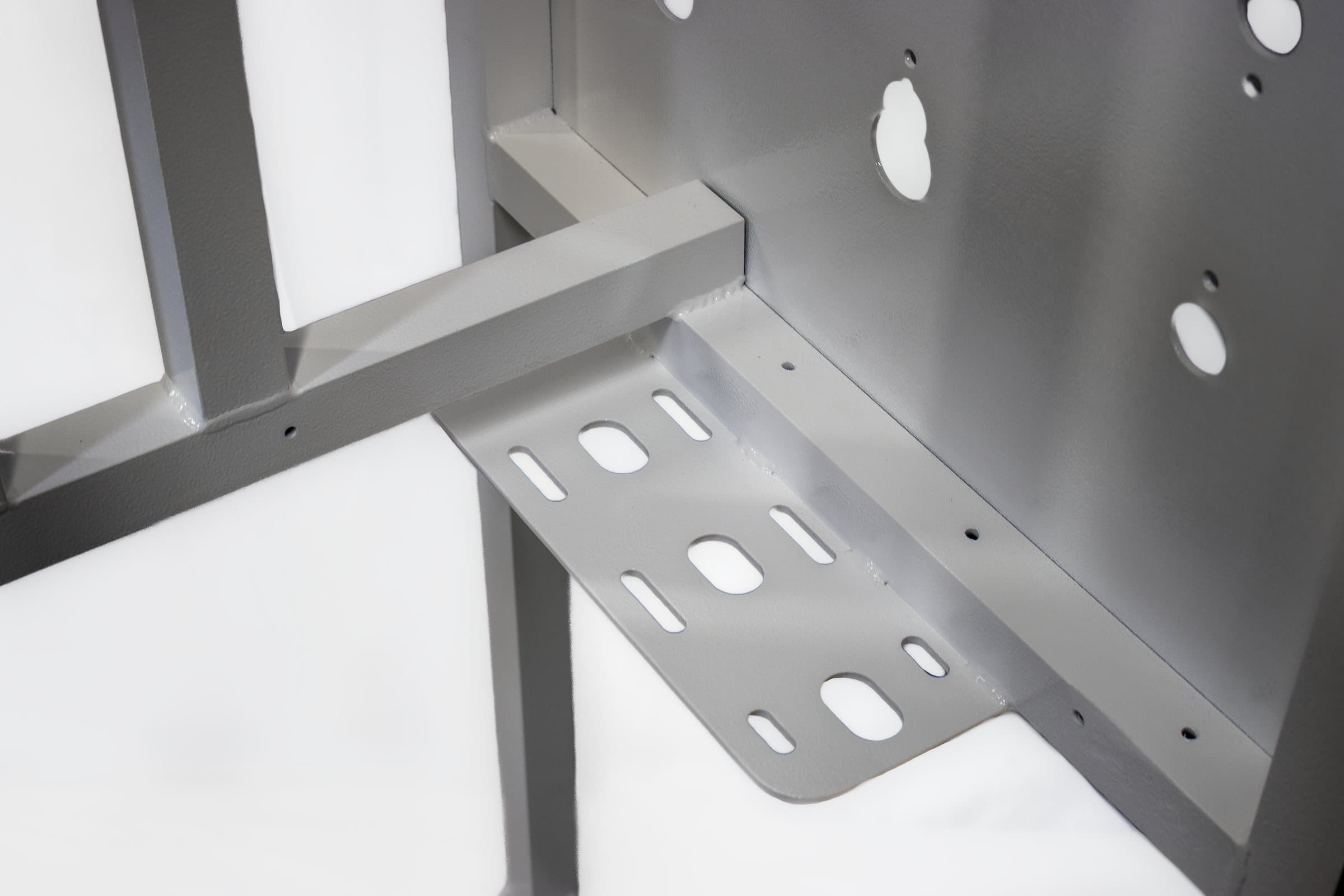
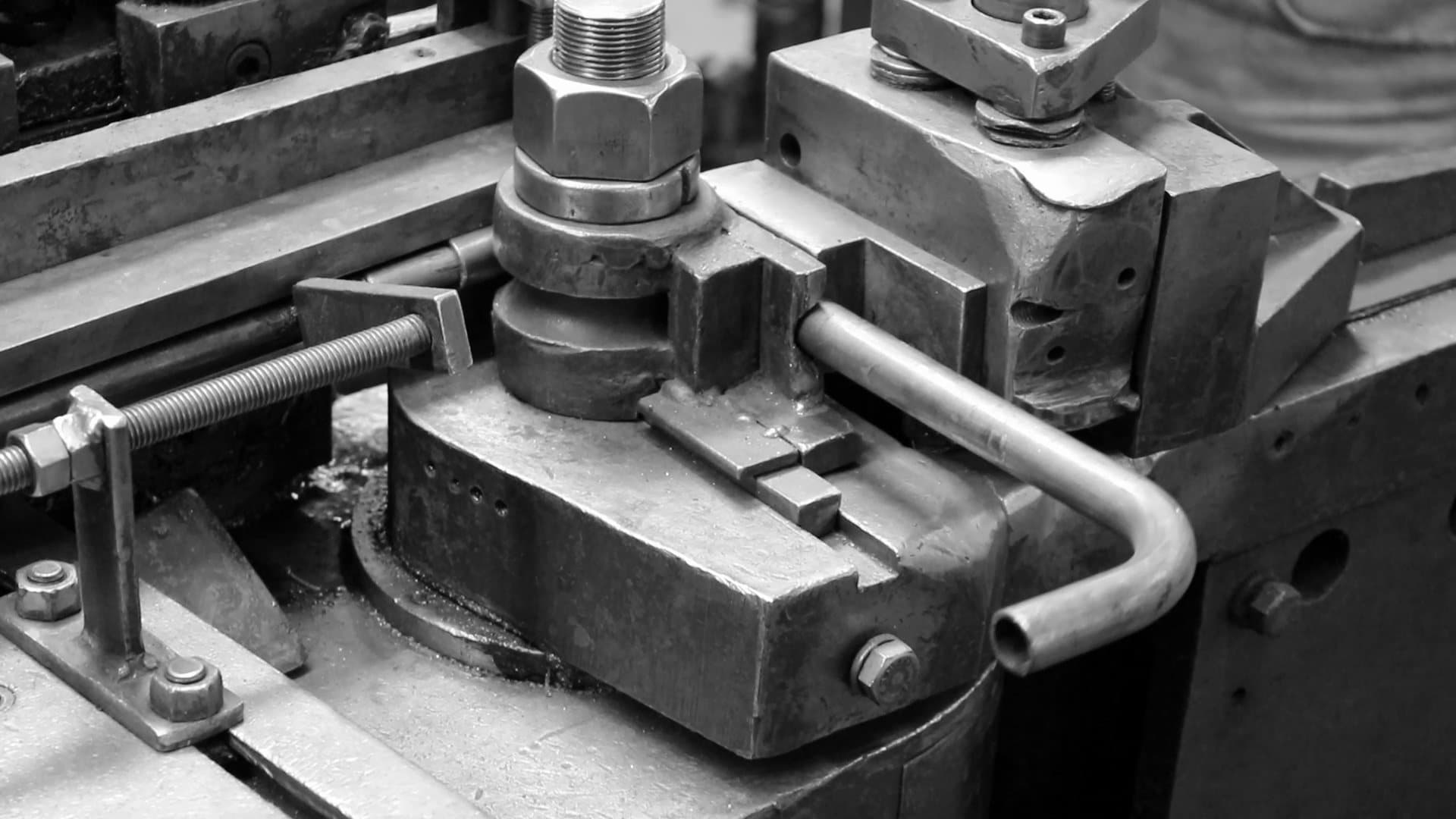
Tube bending shapes tubing into curves and angles without cutting it. Fewer joints means fewer welds, better appearance, and often a stronger frame.
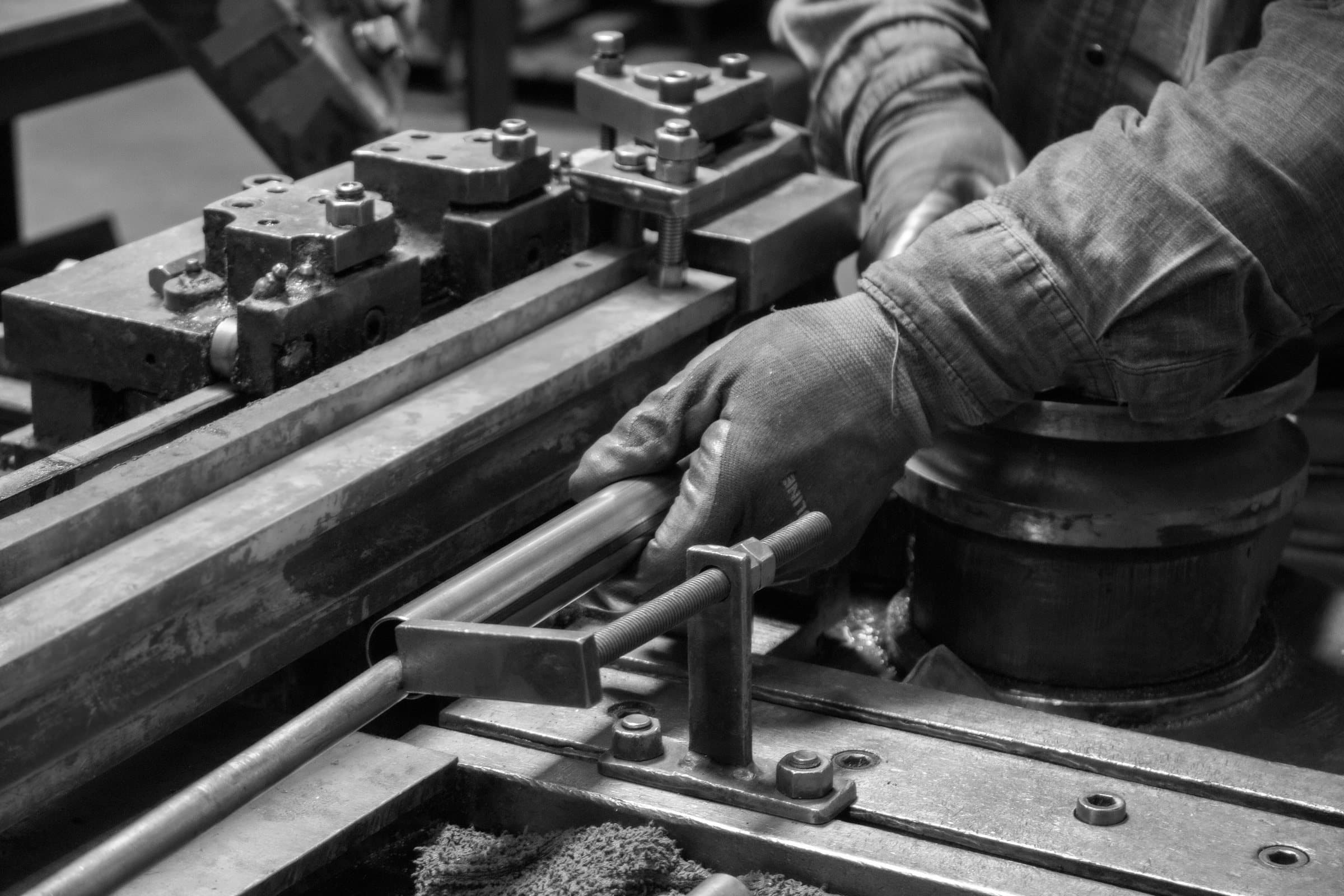
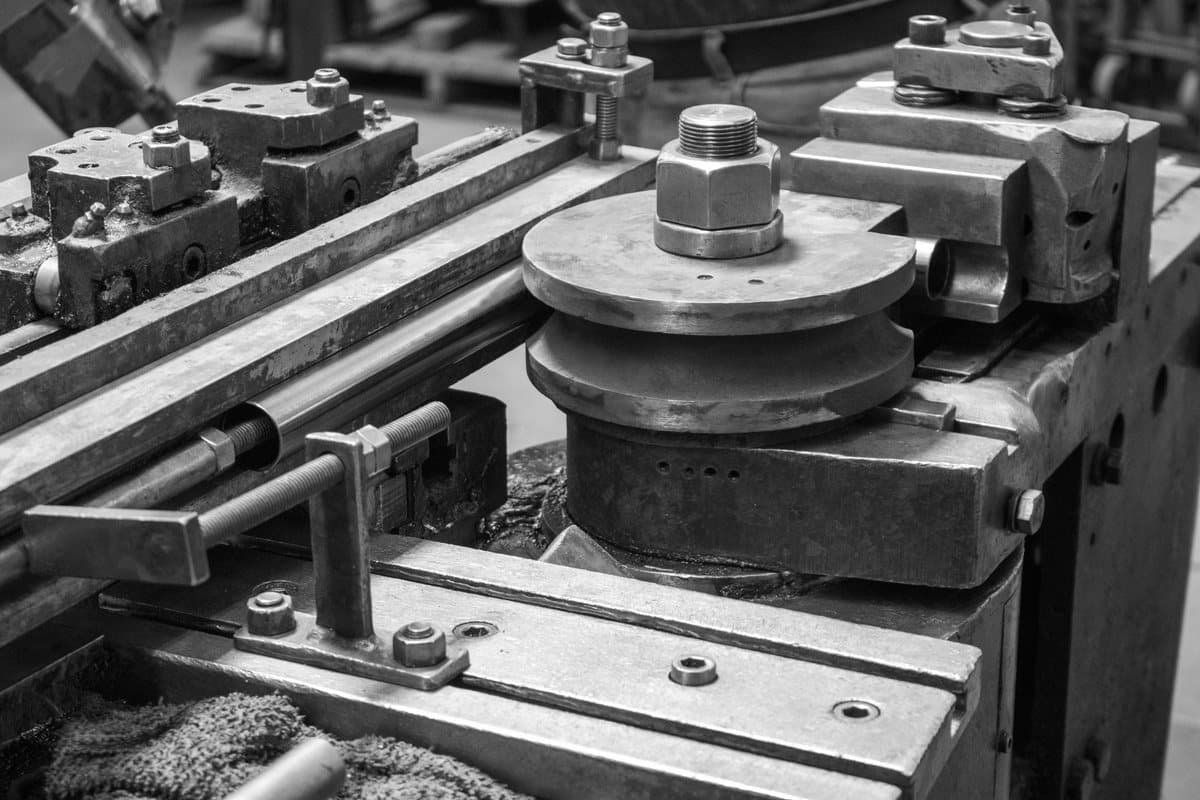
Right runs two pull-type mandrel benders with a library of more than 100 bending dies for round and square tube. Plane-of-bend control keeps multi-plane (3D) parts in orientation from bend to bend. Pressure die assist supports the tube wall through tighter bends.
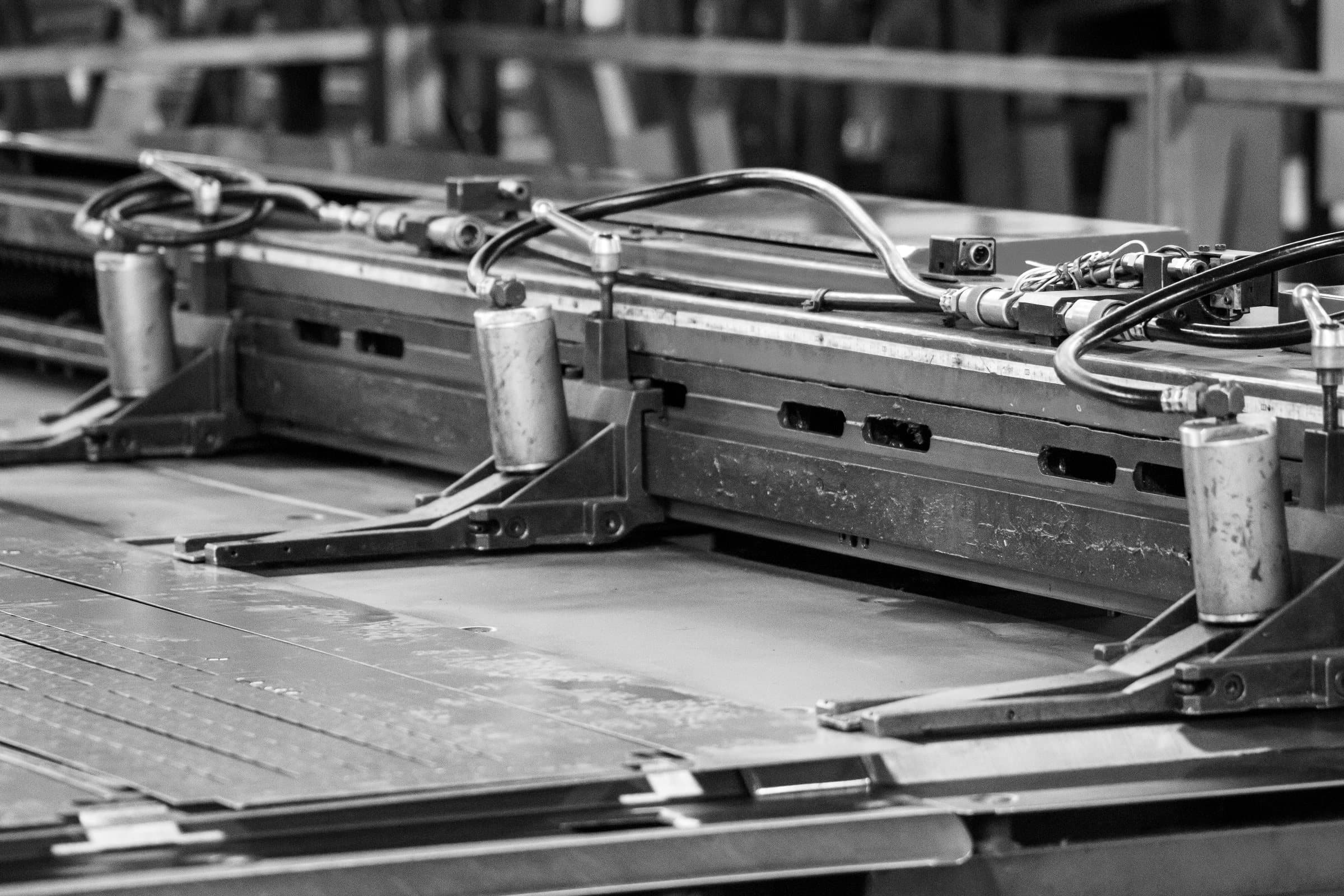
Tube arrives cut to length on dedicated cut-off saws, then gets punched, drilled or milled as needed, ready for welding, hardware and assembly. The operators running these machines are the core of the tube capability.
What's included
- 01
Mandrel Tube Bending
CNC-controlled mandrel bending of round and square tube, from prototype to full production.
- 2 pull-type mandrel tube benders
- 100+ bending dies covering a wide variety of round and square tubes
- Pressure die assist
ApplicationsEquipment support structures · Carts and frames · Handles and rails · Structural and fluid-conveying tubing
- 02
3D Bending — Tube & Channel
Multi-plane, compound bends in tube and channel, held in orientation with plane-of-bend control.
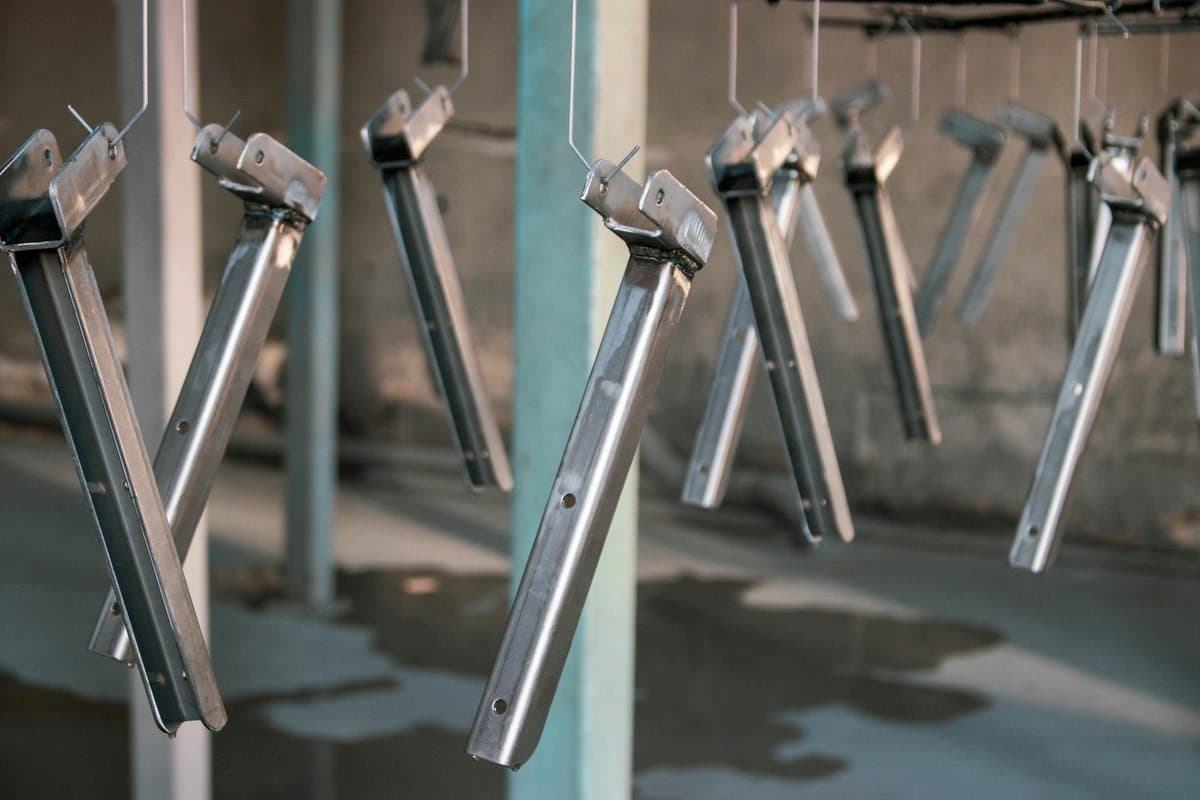
- 3D bending of tubes and channels
- Plane-of-bend control on the mandrel benders
ApplicationsMulti-plane frames · Formed channel · Complex tubular geometry
- 03
Tube Cut-Off
Cutting tube and profiles to length ahead of bending, punching and welding.
- 2 cut-off saws
ApplicationsTube blanks · Extrusion lengths
- 04
Tube Punching
Punched holes and features in tube for hardware, fasteners and mounting.
- Tube punching
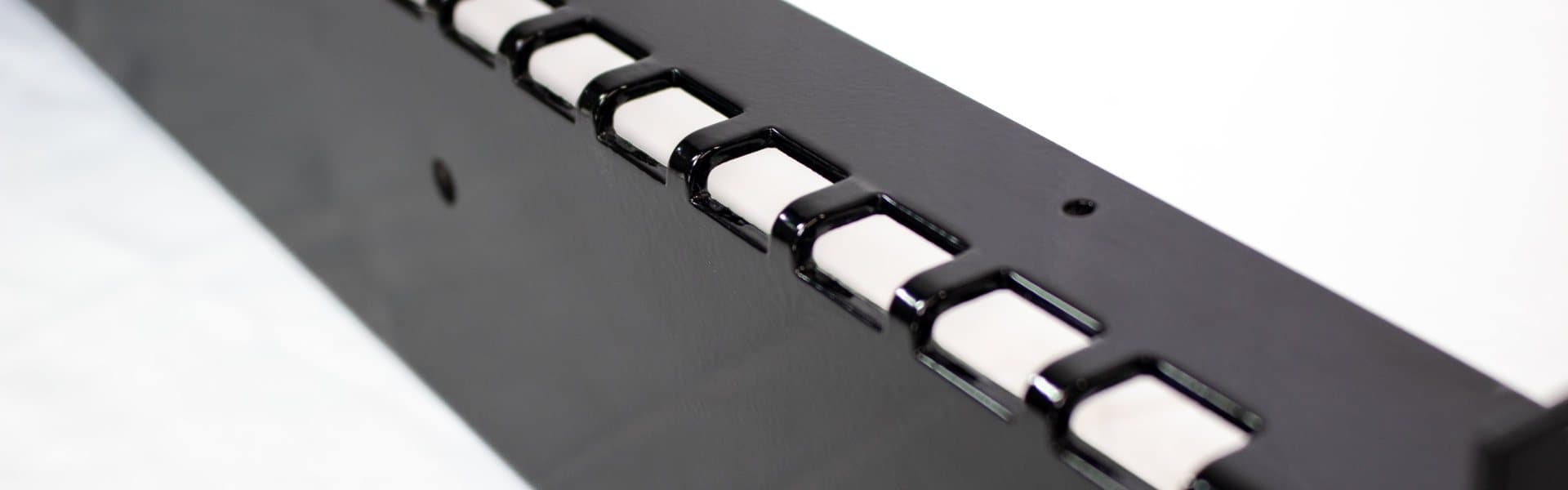
ApplicationsHole patterns for hardware · Slotted tube
- 05
Tube Drilling & Milling
Drilled and milled features in tube and profiles.
- Tube drill – milling
ApplicationsTube joints prepared for welding · Drilled mounting features
On the floor
Processes
- Mandrel tube bending
- 3D bending — tube & channel
- Tube cut-off
- Tube punching
- Tube drilling & milling
Bender features
- Plane-of-bend control
- Pressure die assist
- CNC-controlled
Shapes
- Round tube — OD + wall (gauge)
- Pipe — ID + wall (schedule)
- Square tube
- Rectangular tube
- Custom extruded shapes
Tubing
- Seamless and welded tubing
- Structural and fluid-conveying
Equipment and processes as published by Right Manufacturing. Tolerances are confirmed per drawing.
Materials
Where it's used
- MedicalCarts, monitor display components and equipment support structures for medical device OEMs.
- AutomotiveFormed and welded components for automotive and off-road programs that need repeatable quality over the product life cycle.
- IndustrialEnclosures, frames, brackets and assemblies for industrial equipment built for tough environments.
- ArchitecturalFormed and fabricated metal components for architectural and construction projects.
- DecorativeIndoor and outdoor decorative metal work — bent, formed, welded and finished.
Frequently asked
What is tube bending used for?
Shaping metal tubing into curves or angles without cutting the tube. It's common in automotive, furniture, medical carts and industrial equipment.
What's the difference between tube forming and tube bending?
Tube forming often changes the tube's shape or diameter, such as expanding, reducing or flaring. Bending just curves it.
Is tube bending better than welding joints for frames?
In many cases, yes. Bending avoids seams and can improve strength and appearance, though the best choice depends on the structure.
How long does it take to bend and process tubing?
It depends on complexity and quantity. Simple jobs can be same-day or next-day in some cases, and select prototypes and rush orders can turn in 48 hours. Right confirms timing once specs are reviewed.
Start a project
Need tube bending? Send the drawing.
Send drawings, CAD or a description. Right's team reviews your specifications and returns a detailed quote and timeline.